


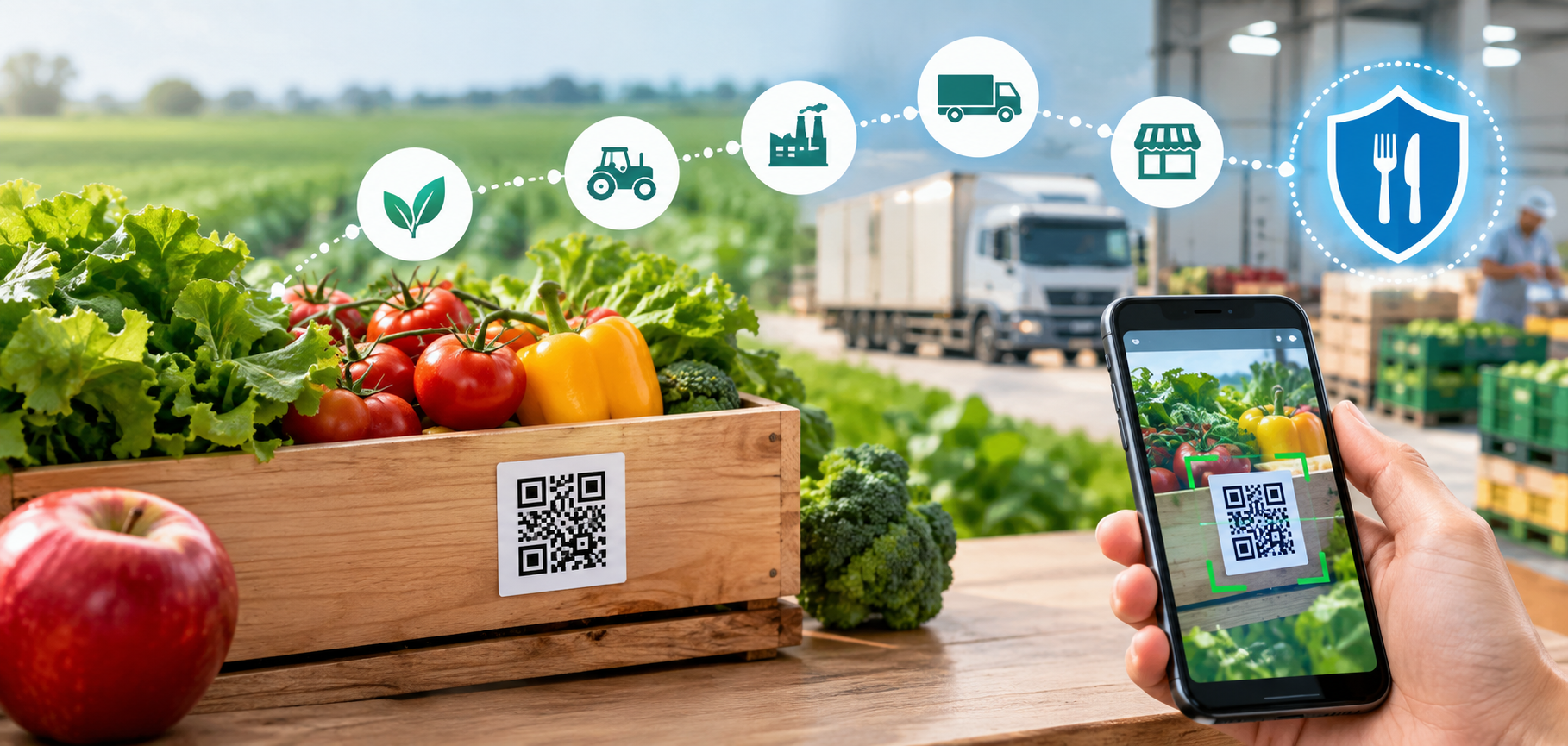
Moving produce from farms to markets involves more than transportation. Harvest timing, collection points, vehicle availability, storage, delivery schedules, and demand all affect distribution efficiency. Agricultural logistics software helps businesses coordinate these activities through shared operational data and digital workflows. For farms, aggregators, processors, and distributors, it can connect field-level planning with transportation, dispatch, delivery, and traceability.
What Is Agricultural Logistics Software?
Agricultural logistics software is a digital system used to plan, coordinate, monitor, and record the movement of agricultural products from farms or collection centers to processing facilities, warehouses, retailers, or buyers.
Unlike basic fleet tools, it can connect logistics activities with agricultural information such as crop, plot, harvest quantity, collection location, batch, and delivery requirements. This improves visibility across the farm-to-market journey.
Why Is Farm-to-Market Logistics Important?
Agricultural products can be time-sensitive, seasonal, and sensitive to handling conditions. A delayed pickup can affect freshness, while poor coordination between harvest teams and transporters can create idle time, missed delivery windows, or unnecessary trips.
Efficient agrologistics connects production with storage, handling, transportation, and distribution. Better coordination across these stages can support product quality, shelf life, and smoother market access.
How Does Agricultural Logistics Software Work?
The system creates a connected workflow for planning and executing product movement:
- Plan harvest and collection: Record expected volumes, locations, dates, and collection requirements.
- Allocate transportation: Match loads with vehicles, drivers, routes, and available capacity.
- Dispatch shipments: Create delivery orders with product, quantity, destination, timing, and handling information.
- Track movement: Capture shipment status, milestones, and delivery progress.
- Confirm delivery: Record received quantities, delivery time, exceptions, and supporting information.
- Update records: Connect logistics data with inventory, procurement, crop, or traceability records.
This workflow reduces dependence on spreadsheets and disconnected records while giving managers a clearer view of each shipment.
Key Features to Look For
The right solution should support the operational realities of agricultural distribution rather than simply tracking vehicles.
Useful capabilities include:
- Route and trip planning for multiple collection and delivery points
- Load and vehicle capacity management
- Pickup and delivery scheduling
- Real-time or milestone-based shipment tracking
- Digital proof of delivery and exception recording
- Batch, lot, crop, or product-level traceability
- Integration with inventory, procurement, farm, and ERP systems
- Mobile access for field and transport teams
- Dashboards for delivery status, quantities, delays, and performance
- Offline data capture where connectivity is unreliable
For distributed operations, location-linked records can show product origin and movement, helping teams maintain better supply-chain visibility.
Benefits of Farm Produce Logistics Management
A connected logistics process can improve several parts of distribution.
Better coordination: Farm teams, collection centers, transporters, warehouses, and buyers can work from the same shipment information instead of separate records.
Improved delivery visibility: An agricultural delivery tracking system can show whether a shipment is planned, dispatched, in transit, delayed, or delivered. Teams can respond to exceptions earlier.
More efficient transportation: Agriculture transportation management software can help consolidate loads, assign suitable vehicles, plan routes, and reduce avoidable trips.
Stronger inventory and traceability: Connecting dispatch records with product and batch information makes it easier to reconcile what was harvested, moved, received, and delivered.
Better decision-making: Managers can use historical delivery data to identify recurring delays, high-cost routes, underused capacity, and collection bottlenecks.
Agricultural Distribution Management System vs. Traditional Processes
Traditional agricultural distribution often depends on phone calls, spreadsheets, paper delivery notes, and manually updated status reports. These methods may work for small volumes but become difficult to control as farms, products, destinations, and transport partners increase. Enterprise Agriculture Software can help businesses centralize distribution data, coordinate operations, track product movement, and improve visibility across agricultural supply chains.
An agricultural distribution management system centralizes planning and status information. Instead of asking multiple teams for shipment updates, managers can work from a shared operational view. The value is not simply digitizing paperwork; it is connecting decisions across distribution.
How to Choose a Farm-to-Market Logistics Platform
Before selecting a farm to market logistics platform, evaluate the complete movement of products.
- Operational fit: Can it handle farms, plots, collection centers, warehouses, processors, and multiple destinations?
- Scalability: Can it support additional crops, locations, users, vehicles, and suppliers?
- Integration: Can it exchange data with farm management, ERP, inventory, procurement, or traceability systems?
- Mobility: Can field and transport teams use it from smartphones or tablets?
- Data quality: Does it capture quantities, timestamps, locations, batches, and delivery exceptions consistently?
- Reporting: Can managers monitor planned versus actual movements and identify bottlenecks?
- Connectivity: Does it support offline workflows where mobile internet is inconsistent?
For larger businesses, integration matters because a separate logistics system can create another data silo.
Common Challenges and Practical Solutions
Inaccurate harvest estimates: Use updated crop and harvest information to improve vehicle and load planning.
Last-minute transport changes: Maintain centralized dispatch information and record changes digitally.
Incomplete delivery records: Use digital proof of delivery and capture quantities, timestamps, and exceptions at receipt.
Disconnected systems: Prefer platforms that can connect farm operations, inventory, procurement, and logistics information.
For multiple growers, an agri supply chain logistics software approach can coordinate product movement across distributed locations.
How KhetiBuddy Supports Connected Agricultural Operations
KhetiBuddy provides a modular digital platform for managing agricultural operations, farm data, crop activities, and supply-chain processes. Its connected approach can complement Farm Management Software, Agri ERP Software, Supply Chain Traceability Software, and Crop Management workflows while keeping operational information structured.
For businesses moving produce across farms, collection points, inventory locations, and buyers, connected farm and logistics records can clarify the journey from production to delivery.
Conclusion
Farm-to-market distribution depends on timely coordination between production, collection, transportation, storage, and delivery. The right platform can bring these activities into a connected workflow, improving visibility, planning, traceability, and operational control. For growing agricultural businesses, the platform should integrate logistics with broader farm and supply-chain data rather than operate as an isolated transport tool.
Streamline Farm-to-Market Operations with KhetiBuddy
KhetiBuddy helps agricultural businesses connect farm operations, crop data, supply-chain processes, and logistics workflows in one digital ecosystem. Explore KhetiBuddy to improve distribution visibility, coordinate operations, and build more connected farm-to-market processes. Book a meeting today to discuss your requirements.
Frequently Asked Questions
What does agricultural logistics software do?
It helps agricultural businesses plan, coordinate, track, and record product movement from farms or collection centers to warehouses, processors, retailers, or buyers. It can also connect shipment data with inventory, crop, procurement, and traceability records.
How can logistics software reduce agricultural delivery delays?
It provides centralized schedules, shipment status, route information, and delivery exceptions. Teams can identify delayed pickups or deliveries earlier, communicate changes, and adjust transportation plans before disruptions affect downstream operations.
Can logistics software track farm produce?
Yes. Depending on its capabilities, the system can associate produce with farms, plots, batches, quantities, collection points, shipments, and destinations. This creates a digital movement record that supports inventory reconciliation and traceability.
Is agriculture transportation management software useful for small farms?
It can be useful when a farm manages multiple vehicles, collection points, buyers, or delivery schedules. Smaller operations may only need basic scheduling and tracking, while larger networks typically benefit from integrations, dashboards, and detailed workflow controls.
What should businesses integrate with logistics software?
Common integrations include farm management, inventory, procurement, ERP, warehouse, order management, and traceability systems. Integration reduces duplicate data entry and helps teams connect production, stock, shipment, and delivery information.
How does a farm-to-market logistics platform improve visibility?
It centralizes information about planned loads, pickups, vehicles, routes, shipment status, quantities, and deliveries. Managers can use this information to identify bottlenecks and understand where products are in the distribution process.
Is logistics software useful for perishable agricultural products?
Yes. For perishable products, timely pickup, appropriate handling, storage coordination, and delivery scheduling are especially important. Digital logistics workflows can help teams coordinate these activities and respond faster when delays or exceptions occur.


Leave A Reply