


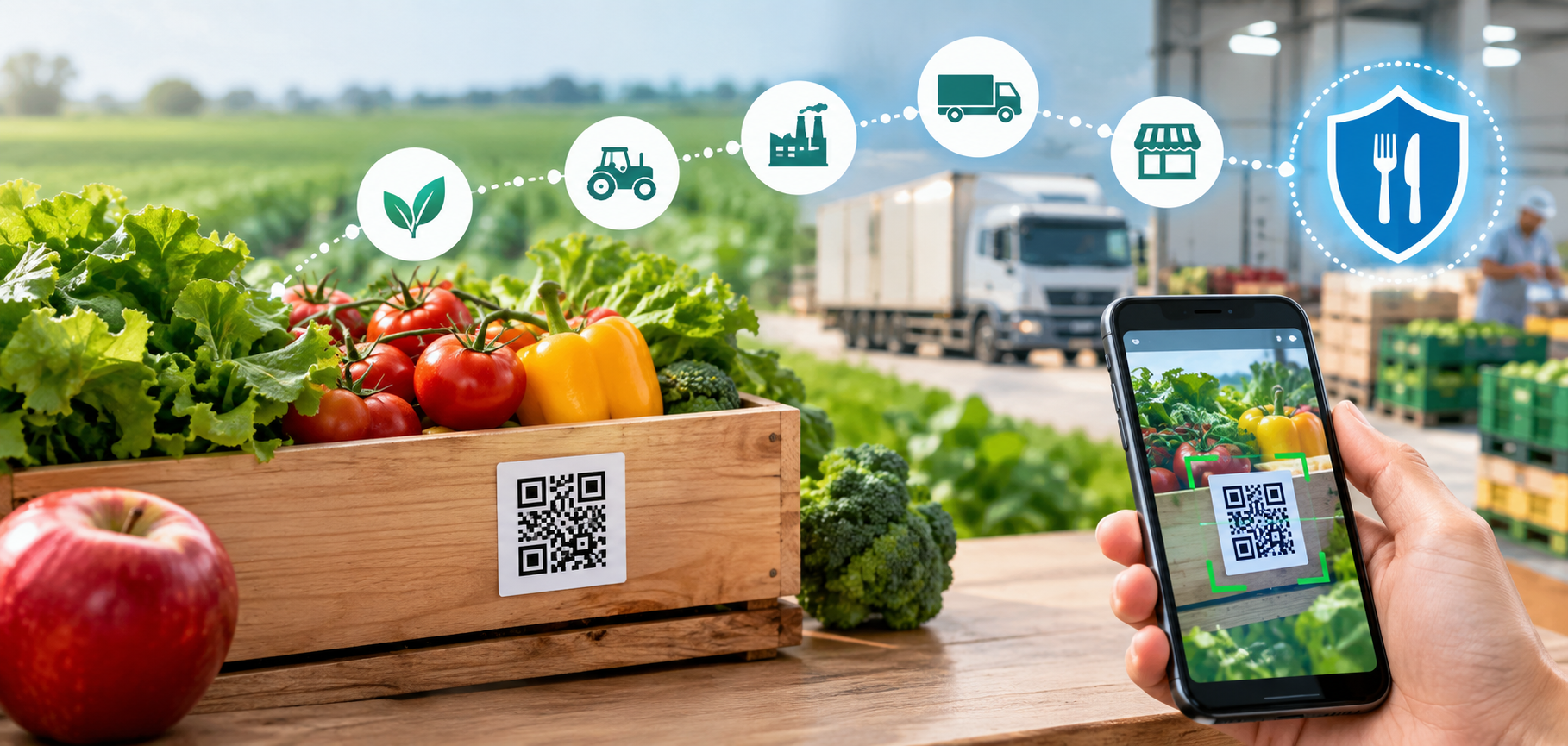
Food supply chains involve multiple stages, from agricultural production and harvesting to processing, storage, transportation, and retail distribution. Without accurate records, businesses may struggle to track product origins, identify affected batches, and respond quickly to quality or safety concerns. The best food traceability software helps businesses connect these stages through digital records, batch identification, and real-time operational data. For agribusinesses, food processors, procurement organizations, and enterprises working with distributed growers, traceability supports better visibility across the supply chain. Choosing the right platform requires more than checking whether it can track products. Businesses should evaluate how it manages farm-level information, connects supply chain partners, handles batch movements, and supports reporting. Understanding these capabilities can help organizations select a system that fits their operations and strengthens farm-to-fork transparency.
Explore how KhetiBuddy’s farm management and traceability solutions connect agricultural operations, improve supply chain visibility, and support informed decisions. Book a demo today to discuss your business requirements.
What Is Food Traceability Software?
Food traceability software is a digital platform that records and connects information about food products as they move through the supply chain. It helps businesses identify where products originated, how they were handled, and where they were transferred or distributed.
A typical traceability platform may record:
- Farm and supplier information
- Crop details and harvest records
- Processing and packaging activities
- Batch and lot identification numbers
- Storage and transportation movements
- Quality checks and inspection records
- Distribution and delivery information
A farm to fork food traceability system connects these records across different supply chain stages, making it easier to follow a product’s journey from agricultural production to its final destination.
Why Is Farm-to-Fork Visibility Important?
Farm-to-fork visibility helps businesses understand how food products move through the supply chain and identify gaps in operational records. It supports product quality monitoring, faster issue investigation, better coordination, and more informed decisions.
When information is scattered across spreadsheets, paper documents, and disconnected software, tracing a product’s journey can become time-consuming. A connected system brings relevant records together and helps authorized teams access consistent information.
Key benefits include:
- Improved product traceability: Identify the source, batch, and movement history of products.
- Faster recall management: Locate potentially affected batches and identify relevant suppliers or recipients.
- Better supplier coordination: Connect procurement teams with growers, processors, and distributors.
- Stronger documentation: Maintain organized records for internal reviews and applicable compliance requirements.
- Greater operational visibility: Monitor product movement and identify missing information across supply chain stages.
These capabilities can be particularly useful for organizations managing multiple farms, procurement centers, warehouses, or processing facilities.
How Does Food Traceability Software Work?
Food traceability software works by capturing product-related information at important points in the supply chain and linking those records through unique identifiers, such as batch or lot numbers.
The process generally follows five stages:
- Farm registration: Record farm locations, grower details, crop information, and production activities.
- Harvest and procurement: Capture harvest dates, quantities, supplier details, and incoming product batches.
- Processing and packaging: Link raw material batches to processing activities, finished products, and packaging records.
- Storage and distribution: Record inventory movements, dispatches, transportation details, and receiving information.
- Product tracking and reporting: Retrieve connected records to investigate issues, verify product history, and support traceability reporting.
For example, if a food processor identifies a quality concern in a finished product, the system can help trace the relevant batch back to its recorded raw material sources and identify connected shipments.
The accuracy of this process depends on complete data entry, consistent batch identification, and reliable information sharing between supply chain partners.
Key Features to Look for in the Best Food Traceability Software
The best food traceability software should support the organization’s actual supply chain processes rather than simply store product records. Businesses should evaluate the following features before selecting a platform.
1. Farm and Supplier Traceability
Farm-level traceability helps businesses connect agricultural production records with procurement and processing activities.
Look for features such as:
- Digital farm and grower registration
- Farm and plot identification
- Crop and harvest records
- Supplier documentation
- Procurement and collection records
An agricultural product traceability management system should connect this information with downstream product records so businesses can track agricultural goods beyond the farm.
2. Batch and Lot Tracking
Batch tracking helps organizations identify specific product groups throughout processing, storage, and distribution.
A suitable platform should support:
- Unique batch and lot identifiers
- Batch creation and splitting
- Merging of ingredients or raw material lots
- Links between input materials and finished products
- Batch-level inventory and dispatch records
These capabilities help businesses identify affected products more precisely during quality investigations or recalls.
3. Integration Across Supply Chain Operations
A connected platform should link procurement, inventory, production, and distribution records without requiring teams to repeatedly enter the same information.
Businesses using food product tracking software for agribusiness should check whether the platform can connect farm records with enterprise workflows, supplier systems, and inventory processes.
Useful integrations may include:
- Farm management platforms
- ERP and inventory systems
- Procurement and warehouse applications
- Quality management tools
- Barcode or QR code scanning systems
Integration requirements will vary depending on the organization’s existing technology infrastructure.
4. Real-Time Data Capture and Offline Access
Field teams may work in locations with unreliable internet connectivity. Mobile data capture and offline functionality can help them record farm activities, harvest quantities, and procurement information even when connectivity is limited.
Once a connection becomes available, recorded information can synchronize with the central platform, depending on the software’s capabilities.
5. Reporting and Traceability Analytics
Reporting tools help managers review product movement, supplier records, batch history, and operational exceptions.
Analytics for food traceability and safety can help organizations identify missing records, monitor traceability performance, and investigate recurring supply chain issues.
Businesses should check whether reports can be filtered by batch, supplier, location, product, and date.
What Types of Businesses Need an End-to-End Traceability Solution?
An end to end food traceability solution can support different organizations depending on their products, supply chain complexity, and documentation requirements.
| Business type | Important traceability requirements |
| Agricultural enterprises | Farm records, crop details, harvest data, and procurement |
| Food processors | Ingredient tracking, production batches, and finished goods |
| Food and beverage companies | Supplier records, product movements, and distribution history |
| Fresh produce businesses | Harvest records, packing details, storage, and shipment tracking |
| Distributed grower networks | Grower identification, collection records, and centralized visibility |
| Warehousing and distribution businesses | Inventory movements, batch identification, and dispatch records |
Organizations should select features based on their operational needs rather than assuming every business requires the same level of traceability.
How to Choose the Right Food Traceability Software
Selecting a suitable platform requires evaluating current processes, data requirements, integration needs, and long-term operational goals.
Use the following steps to compare available solutions.
Step 1: Map Your Supply Chain
Identify every stage where products change ownership, location, condition, or processing status. Include farms, procurement centers, warehouses, processing facilities, and distribution partners.
Step 2: Define Your Traceability Requirements
Determine what information must be recorded for each product, batch, or shipment. Consider supplier identification, harvest details, processing history, storage conditions, and delivery records.
Step 3: Evaluate Data Capture Methods
Check whether teams can record information using mobile applications, barcode scanners, QR codes, or system integrations. Confirm that the methods suit field and facility conditions.
Step 4: Check Integration and Scalability
Evaluate whether the platform can connect with existing enterprise systems and support additional farms, locations, products, and users as operations expand.
Step 5: Test Traceability and Recall Workflows
Ask vendors to demonstrate how the platform traces a finished product back to its source and identifies downstream shipments. Test how quickly teams can retrieve complete records.
Step 6: Review Costs and Support
Compare implementation fees, subscriptions, integrations, training, maintenance, and support. Request a demonstration using workflows similar to your business operations.
Common Mistakes to Avoid When Selecting Traceability Software
Businesses may face traceability gaps when choosing software without considering how information is captured and shared across the supply chain.
Avoid these common mistakes:
- Focusing only on finished products: Farm and supplier records are equally important for upstream traceability.
- Ignoring data quality: Incorrect batch identifiers and incomplete records can weaken traceability.
- Overlooking integration needs: Disconnected systems can create duplicate records and delays.
- Assuming tracking guarantees compliance: Software supports documentation, but businesses must still meet applicable regulatory requirements.
- Choosing without practical testing: A product demonstration should include real traceability scenarios, not just feature presentations.
A digital traceability system for food businesses is most useful when teams follow consistent processes and maintain accurate records at every relevant stage.
How KhetiBuddy Supports Farm-to-Fork Visibility
KhetiBuddy provides a modular agricultural technology platform designed to connect farm-level operations with broader agribusiness workflows. Its capabilities include farm registration, unique farm identification, geolocation, crop management, contract documentation, and operational data capture.
These capabilities can help organizations establish structured farm records and connect agricultural information with procurement, inventory, and traceability processes.
Businesses evaluating food supply chain tracking software can explore how farm management and enterprise systems work together to improve information flow across agricultural operations.
Relevant KhetiBuddy solutions include:
- Farm Management Software: Supports farm and plot records, crop activities, and operational visibility.
- Agri ERP Software: Connects agricultural operations with enterprise workflows.
- Supply Chain Traceability Software: Supports digital traceability across food supply chain processes.
- Agri Supply Chain Management Software: Helps connect agricultural supply chain activities.
Businesses can evaluate these capabilities based on their farm networks, procurement workflows, and traceability requirements.
Conclusion
Choosing the best food traceability software involves evaluating how effectively a platform connects farm records, procurement, processing, inventory, and distribution data. Businesses should prioritize reliable batch tracking, accurate data capture, integration capabilities, reporting, and practical recall workflows. The right solution depends on the complexity of the supply chain, the types of products handled, and the information required at each stage. For agricultural enterprises and organizations working with distributed growers, connecting farm-level data with enterprise operations can strengthen visibility across the product journey. Explore more about how digital traceability solutions can improve supply chain transparency, streamline operations, and support end-to-end food traceability. KhetiBuddy offers farm management and traceability-related capabilities that businesses can explore when evaluating digital solutions for connected agricultural operations. Book a demo with KhetiBuddy to discuss your farm management and traceability requirements.
Frequently Asked Questions
1. What is the main purpose of food traceability software?
Food traceability software records and connects product information across the supply chain, helping businesses identify product origins, track movements, investigate quality issues, and support recall processes.
2. How does batch tracking improve food safety?
Batch tracking connects products with their ingredients, suppliers, processing records, and destinations. This helps businesses identify potentially affected products and investigate quality concerns more efficiently.
3. Can traceability software track products from farms to retailers?
Yes. A connected platform can link farm, procurement, processing, storage, and distribution records, provided participating organizations capture and share accurate information.
4. What factors affect the cost of food traceability software?
Costs depend on user numbers, locations, integrations, implementation complexity, data storage, customization, training, and ongoing support requirements.
5. Is food traceability software suitable for small agribusinesses?
Yes. Small agribusinesses can use traceability tools to organize supplier records, harvest information, batch identification, and product movements, depending on their operational requirements and budget.

Leave A Reply