


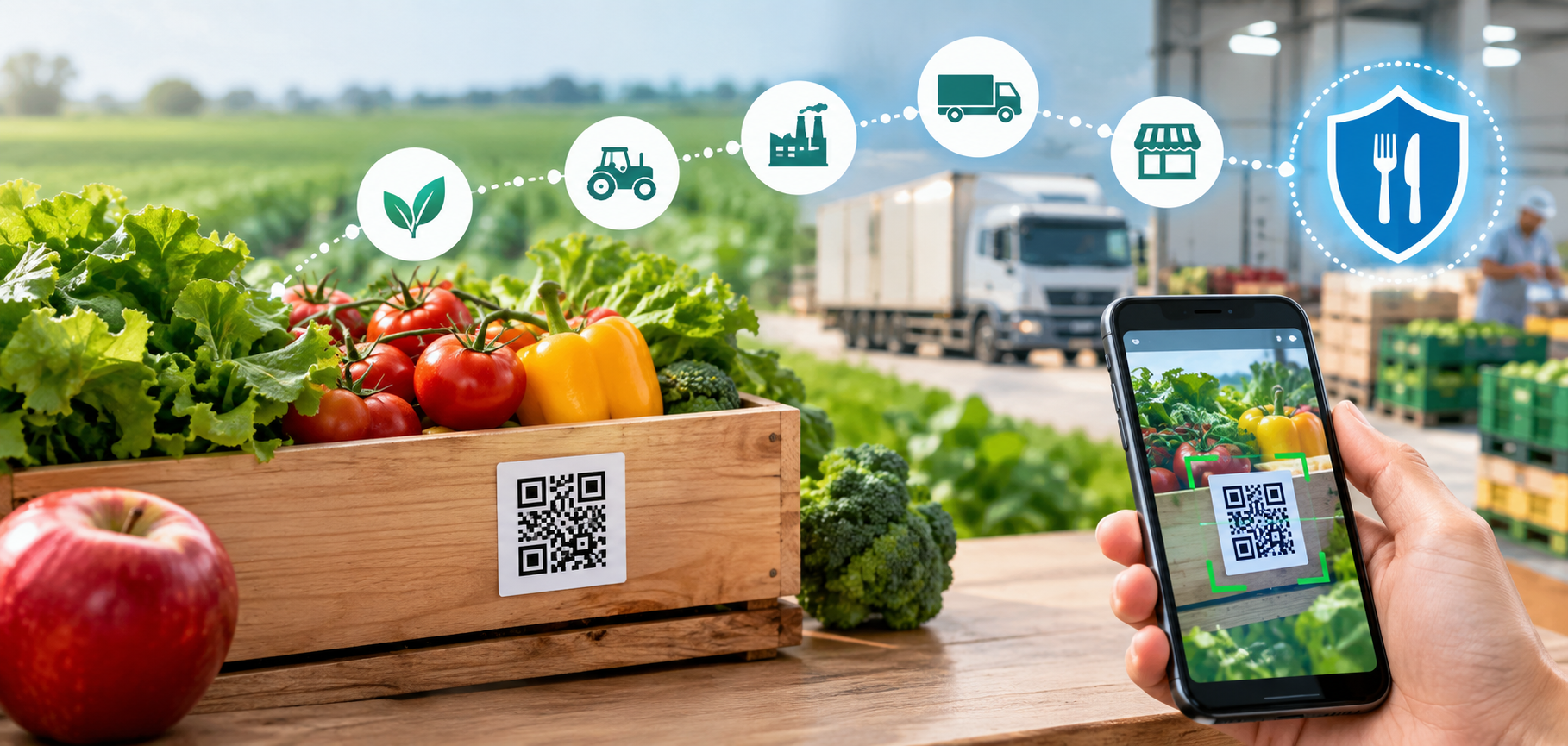
Food moves through multiple stages before reaching consumers, including farming, harvesting, processing, packaging, storage, transportation, and distribution. At each stage, important information can be created, but disconnected records can make it difficult to determine where a particular food lot came from or where it was sent.
A digital food traceability system creates a connected record of these movements and activities. By linking information from farms, suppliers, processors, warehouses, and distributors, businesses can trace products more efficiently, identify information gaps, support recall processes, and improve supply chain transparency. FAO describes traceability as the ability to follow food through specified stages of production, processing, and distribution.
For agribusinesses and food companies managing distributed operations, digital traceability can provide a structured way to connect farm-level information with downstream supply chain activities.
What Is a Digital Food Traceability System?
A digital food traceability system is a technology-based solution that records and connects information about food products as they move through the supply chain. It can capture details such as product identity, lot or batch information, source location, processing activities, movement records, and receiving information.
Instead of relying entirely on disconnected spreadsheets, paper documents, or manually reconciled records, organizations can create a more consistent digital trail.
A typical traceability workflow may connect:
- Farms and growers
- Suppliers and procurement teams
- Processing and manufacturing facilities
- Warehouses and distribution centers
- Transportation activities
- Retailers or other receiving points
The objective is not simply to collect more data. The objective is to make relevant information easier to connect, retrieve, verify, and share when operational or food-safety decisions require it.
Why Is Digital Food Traceability Important for Food Safety?
Traceability helps businesses identify the movement and history of food lots when a quality or safety problem occurs. FAO identifies traceability and recalls as important components of food-control systems because effective tracing can support the identification, location, and withdrawal of affected food lots.
A digital approach can support food safety by helping organizations:
- Identify affected batches or lots more quickly
- Connect products with suppliers and source locations
- Review processing and handling records
- Track where affected products were distributed
- Maintain organized records for investigations
- Reduce dependence on manual record reconciliation
For businesses operating across multiple farms, facilities, or distribution points, this connected view becomes particularly useful because a single product may involve data from several operational systems.
How Does Digital Food Traceability Work?
The process generally starts by assigning an identifiable product, batch, or lot to relevant supply chain events. Information is then captured as the product moves through production, processing, storage, shipment, and receipt.
1. Capture source information
The system records information about the origin of the food, such as the farm, supplier, growing location, product, or source lot.
2. Record critical supply chain events
Activities such as harvesting, packing, shipping, receiving, and transformation can create traceability records. GS1 describes Critical Tracking Events as actual events affecting a traceable object and Key Data Elements as the information describing those events.
3. Connect batches and lots
A digital batch or lot identifier can connect raw materials with subsequent processing and finished products. This makes it easier to understand relationships between incoming ingredients and outgoing products.
4. Track movement
Shipment and receiving information can show where a lot moved and which locations or partners handled it.
5. Retrieve information when required
When a quality issue, recall, audit, or investigation occurs, teams can search relevant records instead of manually reconstructing the product’s journey from separate documents.
The FDA’s Food Traceability Rule similarly uses Critical Tracking Events, Key Data Elements, and traceability lot codes as important components of traceability records for covered foods.
Key Features to Look for in Traceability Software
Choosing a traceability platform should start with operational requirements rather than a list of generic software features.
Important capabilities can include:
Lot and batch tracking
The system should allow businesses to identify and follow lots through relevant supply chain stages.
Source-to-destination visibility
Users should be able to connect a product with its origin, processing activities, storage locations, shipments, and receiving points.
Digital data capture
An electronic food traceability solution can reduce dependence on fragmented paper-based records by providing structured digital records.
Integration with existing operations
Traceability becomes more useful when it can connect with procurement, farm operations, inventory, processing, and other business systems.
Searchable records
Teams should be able to locate relevant product, batch, supplier, and movement information without manually checking multiple sources.
Role-based access
Different teams may require access to different operational information. Access controls can help organizations manage information appropriately.
How It Improves Supply Chain Transparency
Transparency depends on having reliable information about what happened to a product and where it moved. A digital system can connect these events into a more understandable supply chain record.
For example, a food company may receive raw material from several growers. After processing, the material may be combined into a production batch and distributed to multiple warehouses. Without connected records, determining the relationship between the original supply lots and finished products can take significant manual effort.
A food supply chain visibility software approach can help connect these relationships, giving operational teams a clearer view of product movement and associated records.
FAO also notes that digital technologies can improve traceability and transparency by supporting comprehensive data collection, integration, analysis, real-time tracking, and information sharing across agrifood value chains.
Benefits for Agribusinesses and Food Companies
A well-designed traceability system can support several operational objectives.
Faster traceability:
Teams can locate relevant product and lot information without reconstructing the entire supply chain manually.
More targeted recalls:
When affected lots can be identified and connected to distribution records, businesses can better determine which products and locations require attention.
Better supplier visibility:
Source information can be connected to downstream product records, helping teams understand how supplier activities affect later stages.
Improved operational coordination:
Procurement, production, inventory, quality, and supply chain teams can work from connected information rather than isolated records.
Stronger documentation:
Structured digital records can make audits, investigations, and internal reviews more organized.
Greater supply chain transparency:
A connected record can provide a clearer picture of product movement from source through subsequent stages.
For organizations managing agriculture operations alongside downstream supply chain activities, solutions such as Food Traceability Software can form part of a broader digital operating environment.
How to Choose the Right Traceability Solution
Businesses should evaluate traceability technology according to the complexity of their supply chain and the information they actually need to capture.
Consider these factors:
- Supply chain coverage: Can the solution connect farm, supplier, processing, warehouse, and distribution data?
- Lot-level tracking: Can products and materials be tracked at the required batch or lot level?
- Integration: Can it connect with existing farm, ERP, procurement, inventory, or operational systems?
- Data quality: Does it provide consistent methods for capturing and validating information?
- Scalability: Can the platform support additional farms, suppliers, products, locations, and users?
- Accessibility: Can authorized teams retrieve traceability information when needed?
- Compliance requirements: Does the implementation support the recordkeeping requirements relevant to the markets and products being handled?
The FDA states that its Food Traceability Rule does not prescribe one specific technology for maintaining records. Businesses can use paper or electronic records provided they meet the applicable requirements.
This means technology selection should be based on business processes, traceability requirements, data quality, integration needs, and regulatory obligations—not simply on whether a product is marketed as a traceability platform.
Digital Traceability Across Farm and Food Operations
Traceability becomes more valuable when it is connected with other operational information.
For example, a grower network can capture farm and crop information at the production stage, while procurement teams can connect harvested material with supplier and purchasing records. Processing teams can then associate incoming lots with production activities and finished batches.
This creates a connected information flow across the agricultural value chain.
KhetiBuddy‘s broader Farm Management Software and Agriculture Supply Chain Management capabilities can provide complementary operational context for organizations managing farm and supply chain activities.
Common Mistakes When Implementing Traceability
Technology alone does not guarantee effective traceability. Common implementation problems include:
- Inconsistent product and lot identifiers
- Missing data at important supply chain events
- Duplicate records across departments
- Manual data entry without validation
- Poor integration between operational systems
- Limited participation from supply chain partners
- Tracking products without maintaining source relationships
The system should therefore be designed around actual workflows. Employees and supply chain partners also need clear processes for capturing the required information at each relevant event.
GS1’s traceability framework emphasizes the importance of connecting Critical Tracking Events with the Key Data Elements describing those events, supporting interoperability across supply chain partners. ERP for Agriculture can complement this approach by centralizing farm operations, inventory records, procurement data, and supply chain information to improve data visibility and coordination across agricultural businesses.
What Is the Future of Digital Food Traceability?
Food traceability is moving toward more connected and data-driven supply chains. Digital systems can increasingly combine information from farm operations, procurement, processing, inventory, logistics, and distribution into connected records.
A digital food traceability system can become part of a wider data infrastructure rather than functioning as an isolated tracking application. Integration, standardized identifiers, better data capture, and real-time information sharing can help businesses build more responsive supply chains.
The long-term value comes from turning traceability data into usable operational information helping teams understand product history, identify gaps, respond to issues, and improve supply chain coordination.
Conclusion
A digital food traceability system helps food and agribusiness organizations create a clearer digital record of products as they move from source through processing and distribution. Its value extends beyond tracking: connected data can support food safety investigations, recall management, supplier visibility, operational coordination, and supply chain transparency.
For organizations managing complex agricultural and food operations, traceability works best when it connects with farm management, procurement, inventory, and supply chain processes. KhetiBuddy provides a broader digital environment for connecting these operational workflows, helping businesses build more structured and traceable agricultural supply chains.
See how KhetiBuddy can connect farm, food, and supply chain data in one digital platform. Book a demo to explore traceability, operational visibility, and connected workflows for your agribusiness.
Frequently Asked Questions
What is the main purpose of digital food traceability?
The main purpose is to create a reliable record of a food product’s movement and associated information across relevant supply chain stages. This can help businesses identify product origins, connect batches with processing and distribution activities, investigate food-safety issues, and support more targeted recalls when problems occur.
How does digital traceability improve food safety?
Digital traceability can make relevant lot, source, processing, and movement records easier to connect and retrieve. When a food-safety issue occurs, teams can use those relationships to identify potentially affected products and supply chain locations more efficiently instead of relying entirely on fragmented manual records.
What is a digital batch tracking system?
A digital batch tracking system records and connects information associated with specific batches or lots as products move through production, processing, storage, and distribution. It can help organizations understand which raw materials contributed to a finished batch and where that batch was subsequently distributed.
Can traceability software support regulatory compliance?
It can support the recordkeeping and information-management processes required by applicable regulations, but software alone does not guarantee compliance. Requirements vary according to jurisdiction, product, business activity, and applicable exemptions. Organizations should map their system and processes against the regulations that apply to their operations.
Does food traceability require a specific technology?
No single technology is universally required for food traceability. For example, the FDA states that its Food Traceability Rule does not prescribe a specific application or technology for maintaining required records. Businesses should select technology based on their operational requirements and applicable regulatory obligations.
What is the difference between traceability and transparency?
Traceability focuses on the ability to follow a product through defined stages of its supply chain. Transparency is broader and concerns how clearly relevant information can be understood and shared among authorized stakeholders. Digital systems can support both by connecting supply chain events with structured product and location data.
How can agribusinesses connect farm data with food traceability?
Agribusinesses can connect farm-level information such as growers, fields, crops, harvests, and source lots with procurement, processing, inventory, and distribution records. This creates stronger relationships between production data and downstream product movement, making the overall supply chain easier to understand and manage.


Leave A Reply